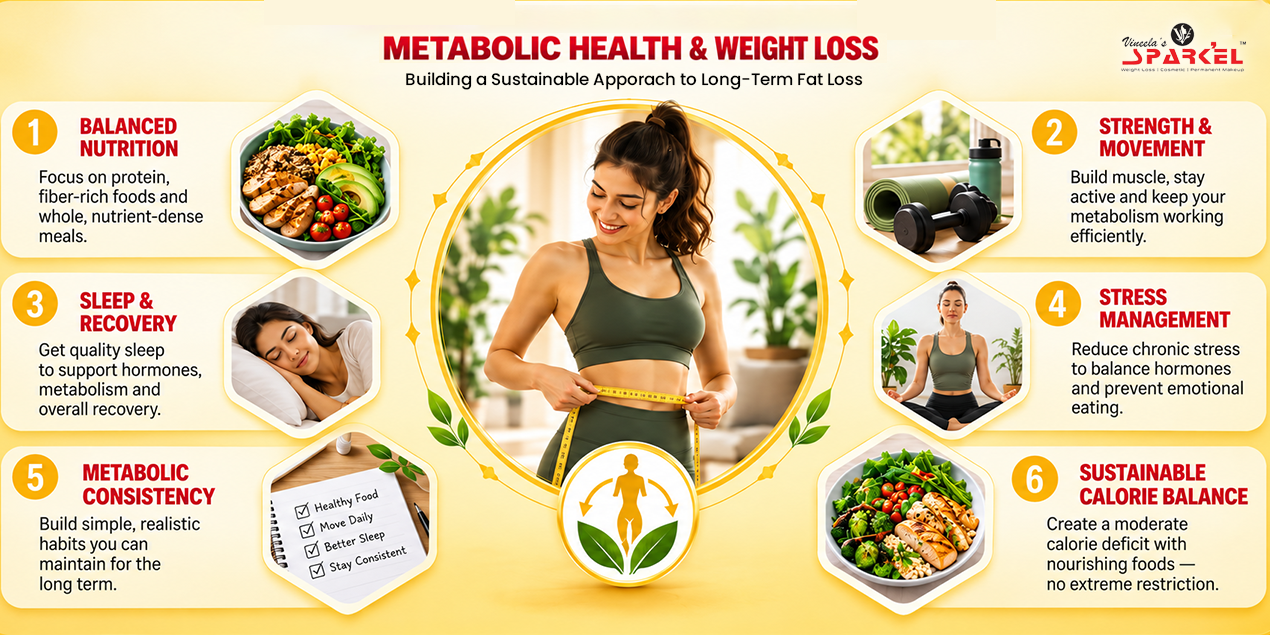
Metabolic Health and Weight Loss: Building a Sustainable Approach to Long Term Fat Loss
Metabolic health plays a central role in how effectively your body manages weight and energy over time. Rather than chasing quick fixes, focusing on habits that support your metabolism can lead to steadier, Long Term Fat Loss. A combination of balanced nutrition, regular movement, adequate sleep and stress management helps keep your metabolic processes working efficiently. Small, consistent changes are often more sustainable than extreme restriction and tend to produce results that last. Understanding how metabolic health connects to weight loss can help you build habits that support your goals for years, not just weeks.
What Should You Eat to Support a Healthy Metabolism?
Supporting your metabolism starts with balanced meals that include adequate protein, fiber and healthy fats. Protein rich foods such as eggs, lean meats, fish, lentils and Greek yogurt help preserve muscle mass, which plays an important role in metabolic rate. Fiber rich foods like vegetables, fruits, whole grains and legumes support digestion and help keep blood sugar levels steady. Healthy fats from nuts, seeds, olive oil and avocados provide lasting energy and support hormone function. Eating regular, balanced meals rather than skipping meals can also help maintain consistent energy levels throughout the day.
Best Lifestyle Habits for Sustainable Fat Loss
Sustainable fat loss depends on more than diet alone daily habits and routines matter just as much. Regular physical activity, including both strength training and cardiovascular exercise, supports muscle maintenance and calorie balance. Getting adequate, quality sleep helps regulate hunger hormones and supports recovery, which can influence metabolic function. Managing stress through simple practices like walking, breathing exercises or hobbies can also reduce habits linked to overeating. Building these habits gradually, rather than all at once, makes them easier to maintain over the long term.
Best Indian Foods to Support Metabolic Health
Supporting metabolic health does not mean giving up familiar Indian meals, as many traditional foods fit well into a balanced routine. Include protein sources such as dal, chickpeas, paneer, tofu and curd alongside a generous portion of vegetables. Choose whole grain options like millets, brown rice, oats and whole wheat roti instead of refined grains for steadier energy. Spices such as turmeric, cinnamon and ginger can be included as part of everyday cooking for added variety and flavor. Enjoying these foods in appropriate portions makes it easier to maintain healthy habits without feeling restricted.
Foods That Can Naturally Support Metabolism
Certain foods can play a helpful role in supporting a healthy metabolism as part of an overall balanced diet. Protein rich foods such as fish, chicken, eggs, beans and tofu require more energy to digest, which can slightly support calorie balance. Fiber rich vegetables, fruits and whole grains help maintain fullness and support stable energy levels throughout the day. Staying well hydrated with water is also important, as adequate hydration supports many everyday bodily functions. Green tea and other unsweetened beverages can be included as part of a balanced routine, though no single food replaces the impact of overall diet and lifestyle.
Habits to Limit When Trying to Lose Fat Sustainably
Sustainable fat loss does not require eliminating every treat, but limiting certain habits can support better long term results. Reducing sugary drinks, fried foods, processed snacks and refined carbohydrates can help manage overall calorie intake more easily. Skipping meals or following overly restrictive diets can sometimes make it harder to maintain consistent energy and healthy eating patterns. Practicing portion control, especially with calorie dense foods, can be more sustainable than complete avoidance. Allowing occasional treats in moderation often supports better long term adherence than strict, all or nothing rules.
How to Build a Metabolism Friendly Meal
Building a balanced, metabolism friendly meal involves combining protein, fiber rich vegetables, whole food carbohydrates and healthy fats. For breakfast, try eggs with vegetables and whole grain toast, or oats topped with fruit and seeds. Lunch and dinner can include dal, paneer, tofu, fish, chicken, beans or lentils paired with a generous portion of vegetables and whole grains. Healthy snacks such as fruit, roasted chickpeas, yogurt or a small handful of nuts can help manage hunger between meals. This simple structure supports balanced nutrition without requiring complicated meal tracking.
Sample One Day Meal Plan for Metabolic Health
A balanced one day meal plan can start with eggs and vegetables or unsweetened yogurt with oats and fruit for breakfast. For lunch, choose dal, mixed vegetables and whole grain roti or a moderate portion of brown rice. Healthy snacks such as fresh fruit, roasted chickpeas, plain yogurt or a small serving of nuts can help manage hunger between meals. Dinner can include protein rich foods like tofu, paneer, fish, chicken, beans or lentils alongside plenty of vegetables. Staying well hydrated with water throughout the day, while limiting sugary beverages, supports overall healthy habits.
How to Prevent Weight Regain by Supporting Metabolism
Preventing weight gain often depends on maintaining the habits that supported your initial progress rather than returning to old patterns. Regular physical activity, particularly strength training, helps preserve muscle mass, which plays a role in long term metabolic health. Adequate sleep and stress management continue to matter well beyond the initial weight loss phase. Including protein, fiber and vegetables in regular meals can help maintain fullness and support consistent eating habits. Monitoring changes in energy, appetite and clothing fit can help you notice and address small shifts early.
Common Mistakes That Slow Down Metabolic Health
Certain common habits can unintentionally work against metabolic health and long term fat loss. Following overly restrictive diets or skipping meals can make it harder to sustain energy and consistent eating patterns over time. Neglecting protein intake or strength training can affect muscle maintenance, which plays a role in metabolic rate. Chronic stress and inadequate sleep are also often overlooked factors that can influence eating patterns and energy balance. Instead of aiming for perfection, returning to your regular balanced routine after an off day tends to support better long term consistency.
Why a Sustainable Approach Matters for Long Term Fat Loss

A sustainable approach to metabolic health and fat loss focuses on habits you can maintain well beyond a short term goal. Balanced nutrition, regular movement, adequate sleep and stress management work together to support your body's natural processes over time. Choosing habits that fit your schedule, preferences and lifestyle makes it easier to stay consistent day to day. Rather than relying on strict rules or short term diets, gradual and realistic changes tend to produce more lasting results. Combining these habits consistently can help support long term fat loss as a natural part of everyday life.
Conclusion
Supporting metabolic health is an important part of achieving sustainable, long term fat loss rather than temporary results. Balanced nutrition, regular physical activity, adequate sleep and stress management all work together to support your body's natural processes. V Sparkel encourages practical, realistic habits that fit naturally into your daily routine rather than extreme or restrictive approaches. Staying hydrated, eating consistently and practicing mindful habits can further support your goals over time. With a steady and sustainable approach, supporting your metabolic health can become a lasting part of your overall wellness journey.
FAQs
1. What is the connection between metabolic health and weight loss?
Metabolic health influences how your body manages energy and weight, so supporting it through balanced nutrition, exercise and sleep can lead to steadier, longer lasting weight loss.
2. Can Indian foods support a healthy metabolism?
Yes, foods like dal, paneer, millets, whole grains and vegetables can support metabolic health when included in balanced, appropriately portioned meals.
3. How can I prevent weight regain after losing fat?
Preventing weight regain is supported by maintaining balanced nutrition, regular strength training, adequate sleep, stress management and consistent, sustainable habits over time.