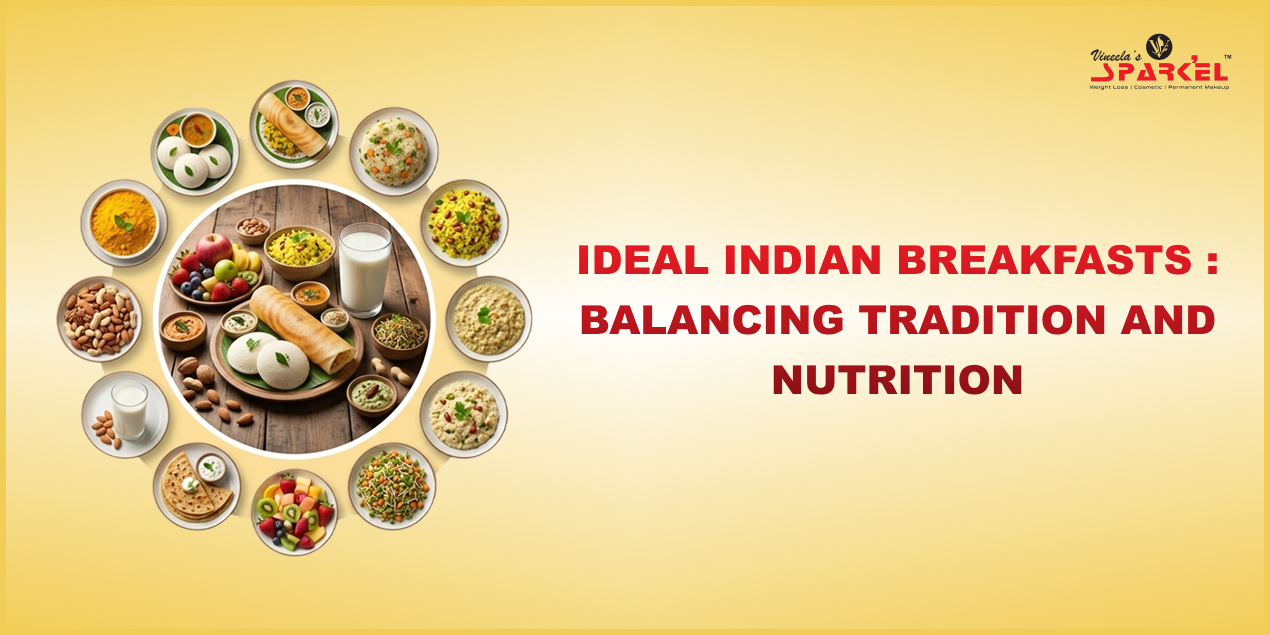
Ideal Indian Breakfasts: Balancing Tradition and Nutrition
An ideal Indian breakfast is more than just the first meal of the day, it sets the tone for your energy levels, metabolism and overall health. In many households across India, breakfast combines tradition with nutrition, bringing together recipes that have been passed down through generations. These meals often use locally available grains, lentils, vegetables and spices, making them both flavorful and nourishing.
A healthy traditional Indian Breakfast provides a balanced mix of carbohydrates, proteins, healthy fats, vitamins and fiber. This balance is essential for maintaining steady energy levels throughout the morning. Many people today are searching for healthy Indian breakfast ideas that preserve authentic flavors while supporting modern nutritional needs. When planned thoughtfully, an ideal Indian breakfast can help improve digestion, enhance concentration and promote long-term wellness.
What Is an Ideal Indian Breakfast?
An ideal Indian breakfast is one that balances taste, tradition and nutrition while meeting the body's energy requirements for the day. Unlike quick sugary foods or processed meals, a balanced Indian breakfast focuses on whole ingredients that nourish the body and keep hunger at bay for longer periods.Typically, a balanced Indian breakfast includes complex carbohydrates from grains like rice, wheat or millets, combined with protein sources such as lentils, yogurt, paneer or sprouts. This combination helps stabilize blood sugar levels and supports sustained energy release. Fiber-rich vegetables and fruits are also an important part of a nutritious Indian breakfast because they aid digestion and provide essential vitamins and minerals.
Why Traditional Indian Breakfasts Are Naturally Nutritious
Another advantage of a traditional Indian breakfast is the inclusion of spices like turmeric, cumin, ginger and mustard seeds. These spices not only enhance taste but also have medicinal properties that aid digestion and boost immunity. Because these meals are cooked fresh and often include a variety of ingredients, they provide a naturally balanced nutritional profile. In today’s fast-paced lifestyle, many people are rediscovering the benefits of healthy traditional Indian breakfast options. These dishes prove that it is possible to enjoy delicious meals while maintaining good health and supporting overall well-being.
Components of a Balanced Indian Breakfast
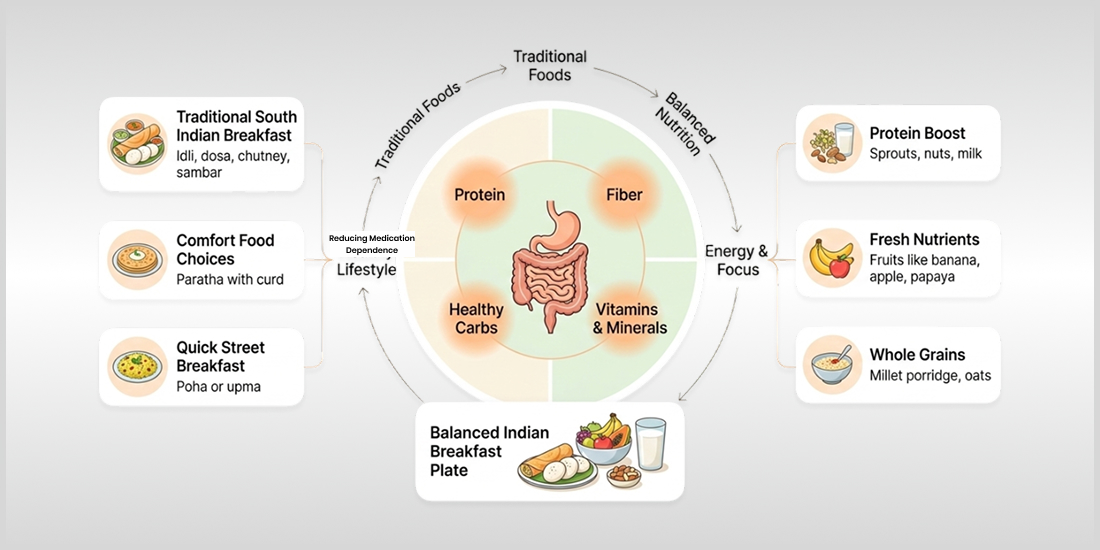
A balanced Indian breakfast contains a combination of macronutrients and micronutrients that work together to support the body’s needs during the early hours of the day. The right balance ensures sustained energy, improved focus and better digestion.Carbohydrates form the foundation of many Indian breakfast dishes. Foods such as idli, dosa, upma, poha and paratha provide complex carbohydrates that release energy gradually. Unlike refined foods, these traditional options keep you full for longer and help prevent mid-morning hunger.
Protein is another essential component of a nutritious Indian breakfast. Lentils, paneer, yogurt, sprouts and chickpea flour are commonly used ingredients that supply plant-based protein. Protein plays a crucial role in maintaining muscle health and supporting metabolism. When paired with whole grains, these foods create a balanced meal that fuels the body effectively.Healthy fats also contribute to a well-rounded breakfast. Ingredients such as nuts, seeds and small amounts of ghee provide essential fatty acids that support brain function and nutrient absorption. Including fruits and vegetables in the morning meal adds vitamins, minerals and antioxidants that strengthen the immune system and promote overall health. By combining these components, an ideal Indian breakfast becomes both satisfying and nutritionally complete.
Healthy Traditional Indian Breakfast Ideas
Across India, breakfast dishes vary widely depending on regional ingredients and culinary traditions. However, many of these meals share a common focus on nutrition and balance. South Indian breakfasts often include dishes like idli, dosa and vegetable upma. These foods are usually prepared with fermented batter or semolina and served with sambar and chutney, creating a meal that contains carbohydrates, protein and fiber. Because these dishes are lightly cooked and often steamed, they are considered among the healthiest breakfast choices.
In northern regions, breakfasts such as vegetable parathas paired with yogurt or pickles are popular. When prepared with whole wheat flour and fresh vegetables, these dishes offer fiber and essential nutrients while maintaining traditional flavors. Similarly, dishes like poha, which is made from flattened rice, peanuts and vegetables, provide a light yet energizing start to the day. High-protein options are also widely available in Indian cuisine. Moong dal chilla, which is a savory lentil pancake, is an excellent protein-rich vegetarian Indian breakfast. Sprouted lentil salads and paneer-based dishes further enhance the protein content while keeping the meal wholesome and satisfying.
Quick and Nutritious Indian Breakfast for Busy Mornings
Many households prepare batter or ingredients in advance, allowing dishes like dosa or chilla to be cooked quickly in the morning. Vegetable sandwiches made with whole-grain bread and paneer or sprouts can also serve as a convenient breakfast that delivers both carbohydrates and protein.Overnight oats with Indian flavors such as cardamom, almonds and fruits provide a modern twist on traditional breakfast ingredients. Smoothies made with milk, banana, nuts and seeds are another option that offers energy and nutrients in a short amount of time.Even on busy mornings, choosing wholesome ingredients ensures that breakfast remains nutritious. By prioritizing balanced meals instead of processed foods, individuals can maintain steady energy levels and better productivity throughout the day.One effective approach is reducing excessive oil while maintaining flavor through spices and fresh ingredients.Using whole grains instead of refined flour can significantly increase fiber content and improve digestion.Including seasonal vegetables in breakfast dishes adds vitamins and minerals while enhancing taste and color.
Common Mistakes to Avoid in Indian Breakfasts
Despite the variety of nutritious dishes available, certain habits can reduce the benefits of breakfast. One common mistake is skipping breakfast entirely, which can lead to low energy levels and overeating later in the day.Another issue is relying heavily on refined carbohydrates or fried foods. While these options may be convenient, they often lack the balanced nutrients required for sustained energy. Consuming meals that consist mostly of carbohydrates without adequate protein or fiber can lead to sudden drops in energy levels.By choosing wholesome foods and avoiding excessive processed ingredients, individuals can enjoy the full benefits of an ideal Indian breakfast.
Conclusion
An ideal Indian breakfast perfectly combines tradition and nutrition, offering meals that are both delicious and beneficial for overall health. By including whole grains, lentils, vegetables and healthy fats, traditional breakfast dishes provide balanced nutrition that supports energy, digestion and long-term wellness. Even in busy lifestyles, simple adjustments and mindful choices can transform everyday meals into healthier options.
For individuals and families looking to adopt better lifestyle habits, exploring healthy traditional Indian breakfast ideas is an excellent starting point. Online Nutrition like VSparkel encourage a holistic approach to health, helping people understand how balanced nutrition, mindful eating and lifestyle choices contribute to overall well-being. By embracing nutritious breakfast habits, it becomes easier to maintain energy, productivity and a healthier life.
FAQs
1. What is the healthiest Indian breakfast?
The healthiest Indian breakfast is one that combines complex carbohydrates, protein and fiber. Options such as idli with sambar, vegetable upma, moong dal chilla and poha with peanuts are considered nutritious because they provide balanced energy and essential nutrients.
2. How can I make my Indian breakfast more nutritious?
To make your Indian breakfast more nutritious, focus on whole ingredients and balanced portions. Replace refined flour with whole grains like millets or whole wheat, add protein sources such as lentils, paneer, sprouts and include fresh vegetables in dishes.
3. Why is a balanced Indian breakfast important for health?
A balanced Indian breakfast is important because it provides the body with essential nutrients needed to start the day. Meals that include carbohydrates, protein, fiber and healthy fats support stable energy levels, improve concentration and help regulate metabolism.