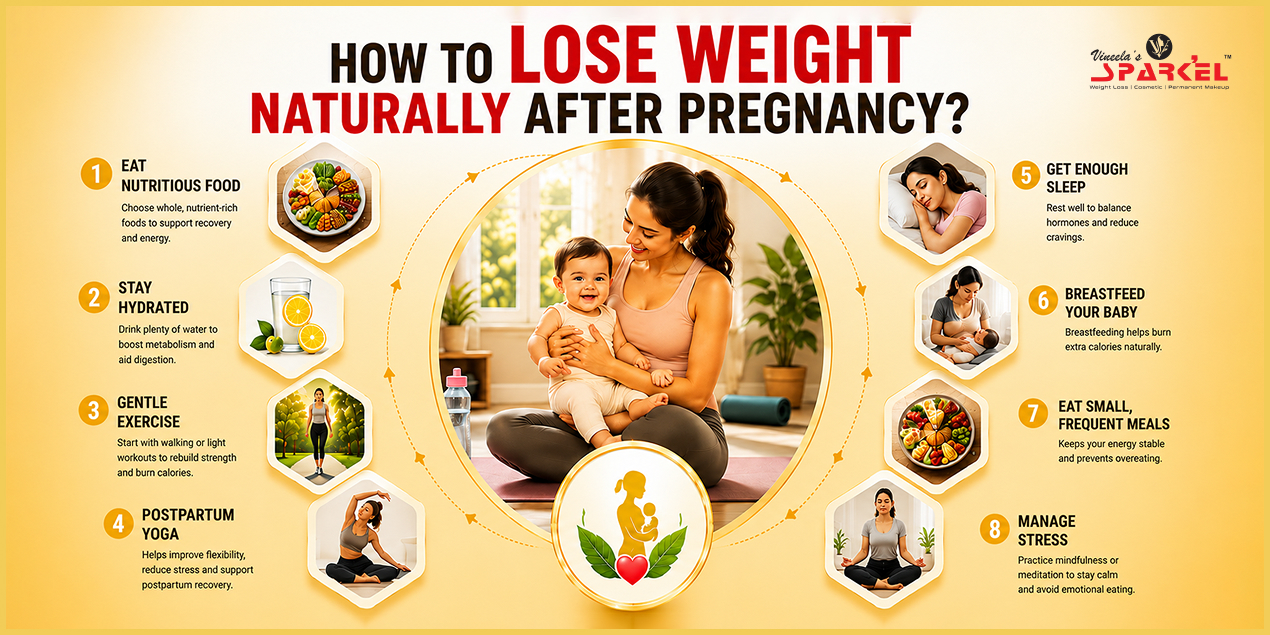
How to Lose Weight Naturally After Pregnancy?
Losing weight naturally after pregnancy requires patience, balanced nutrition and healthy lifestyle habits. New mothers should focus on nutrient-rich foods, proper hydration, gentle physical activity and adequate rest to support postpartum recovery. Avoiding crash diets and setting realistic goals can help promote gradual and sustainable weight management. Since every mother’s recovery is different, there is no fixed timeline for postpartum weight loss. A healthy postpartum routine should prioritize overall well-being while allowing the body sufficient time to heal and regain strength.
Understanding Postpartum Weight Changes
Postpartum weight changes are a natural part of recovery as the body adjusts after pregnancy and childbirth. Some weight may decrease naturally after delivery, while the remaining pregnancy-related weight can take time to reduce. Factors such as nutrition, physical activity, sleep, breastfeeding, genetics, stress and overall health can affect postpartum weight management. Every mother's recovery is different, so avoiding comparisons and unrealistic social media expectations is important. Before making major diet or exercise changes, consult a qualified healthcare professional, especially after a cesarean delivery, complicated birth, or ongoing health concerns.
When Should You Start Focusing on Weight Loss?
After childbirth, the early postpartum period should focus on recovery, proper nutrition, rest and overall well-being. Rather than rushing into weight loss, new mothers should build healthy habits such as eating balanced meals, staying hydrated, getting adequate rest and adding gentle movement when medically cleared. Once the body has recovered sufficiently, physical activity can be gradually increased. A slow and sustainable approach to postpartum weight management can support long-term health and help avoid restrictive dieting and weight regain.
Healthy Nutrition for Postpartum Weight Management
Healthy nutrition plays an important role in supporting postpartum weight management and overall wellness. Focus on balanced meals that include vegetables, fruits, whole grains, protein-rich foods and healthy fats to maintain energy and nourishment. Protein sources such as eggs, beans, lentils, lean meats, fish and yogurt can support muscle health and improve meal satisfaction. Fiber-rich fruits, vegetables and whole grains can promote balanced eating, while nuts, seeds, avocados and healthy oils provide beneficial fats. Limiting sugary drinks and highly processed foods can encourage healthier habits without extreme restrictions. Preparing nutritious meals and snacks in advance can also make healthy eating easier for new mothers.
Natural Ways to Support Postpartum Weight Loss
Supporting postpartum weight loss starts with sustainable lifestyle habits rather than restrictive diets or sudden changes. Gentle walking and regular daily movement can gradually improve activity levels after appropriate medical clearance. As recovery progresses, suitable strength exercises may help support muscle fitness and physical function. Staying well hydrated supports overall wellness and may help manage unnecessary snacking caused by thirst. A balanced routine that includes nutritious foods, movement, hydration, rest and gradual progress can support healthy postpartum weight management.
Managing Postpartum Belly Changes
Postpartum belly changes are common and can result from pregnancy-related stretching, body composition changes, and the natural recovery process after childbirth. A healthy postpartum approach focuses on balanced nutrition, regular physical activity and gradual fitness improvements rather than trying to target abdominal fat specifically. Suitable core exercises may help rebuild strength when introduced at the right stage of recovery. Women with abdominal discomfort or pelvic-floor concerns should seek appropriate professional guidance. Most importantly, postpartum recovery takes time and every body recovers differently. Embracing gradual progress and realistic expectations can support a healthy postpartum journey.
Postpartum Exercise for New Mothers
Postpartum exercise can support physical recovery, strength, mobility, cardiovascular fitness and emotional wellbeing. New mothers should return to physical activity gradually based on their recovery stage and healthcare provider’s guidance. Gentle walking is often a suitable starting point, followed by appropriate strength and mobility exercises as comfort improves. Avoid intense workouts or excessive exercise aimed at rapid weight loss, as the body needs time to recover. If you experience significant pain, unusual bleeding, dizziness, or breathing difficulties, stop exercising and seek medical advice.
Weight Management While Breastfeeding
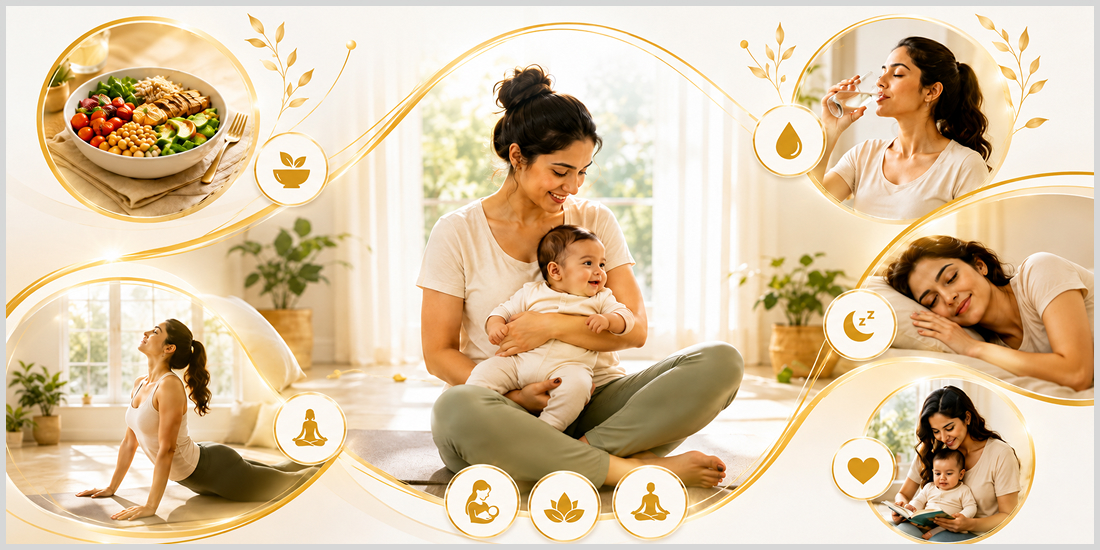
Weight management while breastfeeding should focus on balanced nutrition rather than restrictive dieting or rapid weight loss. Include protein-rich foods, vegetables, fruits, whole grains and healthy fats to support energy and overall wellness. Staying hydrated and eating regular, nourishing meals can help maintain daily energy levels. Weight changes during breastfeeding vary from person to person due to hormones, appetite, sleep, activity and metabolism. If you have concerns about weight, nutrition, energy, or milk supply, consult a healthcare professional or registered dietitian for personalized guidance.
Practical Postpartum Weight Loss Tips
Practical postpartum weight loss tips focus on gradual, sustainable habits rather than extreme goals. Prioritize nutritious meals with protein and fiber, stay hydrated and limit sugary drinks to support healthy recovery. Include short periods of gentle movement throughout the day as your body allows. Adequate rest and support from family can make it easier to manage meals, self-care and daily routines. Track progress through improved energy, strength, mobility, fitness and confidence, not just the number on the scale.
Mistakes to Avoid After Pregnancy
Avoid crash diets and extreme calorie restriction, as they may limit essential nutrition during postpartum recovery. Returning to intense exercise too quickly can also delay recovery, so gradually rebuild strength and fitness. Avoid comparing your postpartum progress with other mothers, as every recovery journey is different. Most importantly, do not ignore physical or emotional symptoms while focusing on weight loss. Prioritize balanced nutrition, gentle activity, adequate rest, and overall postpartum wellbeing.
Creating a Sustainable Postpartum Routine
Creating a sustainable postpartum routine can support recovery, energy and healthy lifestyle habits. Start your day with water and a nutritious breakfast rich in protein and fiber. Choose balanced meals and healthy snacks throughout the day to maintain energy levels. When medically appropriate, gradually include gentle activities such as walking, mobility exercises and suitable strengthening workouts. Prioritize relaxation, meal preparation and rest whenever possible to reduce daily stress. Most importantly, focus on consistency and create a realistic routine that fits your postpartum lifestyle.
Conclusion
Losing weight naturally after pregnancy is a gradual process that should focus on healthy and sustainable lifestyle habits. A balanced diet, regular physical activity, proper hydration, quality sleep and adequate recovery can support healthy postpartum weight management. VSparkel can complement these healthy lifestyle practices by supporting a consistent commitment to overall wellness. New mothers should avoid extreme diets and focus on realistic progress while listening to their body’s needs. With patience and consistency, healthy postpartum weight management can become a sustainable part of everyday life.
FAQs
1. How can I lose baby weight safely after childbirth?
Lose baby weight safely with balanced nutrition, hydration, gradual exercise and personalized guidance from a healthcare professional, especially while breastfeeding.
2. What foods are good for postpartum weight management?
Nutrient-dense foods like vegetables, fruits, whole grains, lean proteins, eggs, legumes, nuts, seeds and dairy can support healthy postpartum weight management and recovery.
3. How can I reduce belly fat naturally after pregnancy?
After medical clearance, a balanced diet, regular walking, strength training and postpartum core exercises can support healthy, gradual belly fat reduction.