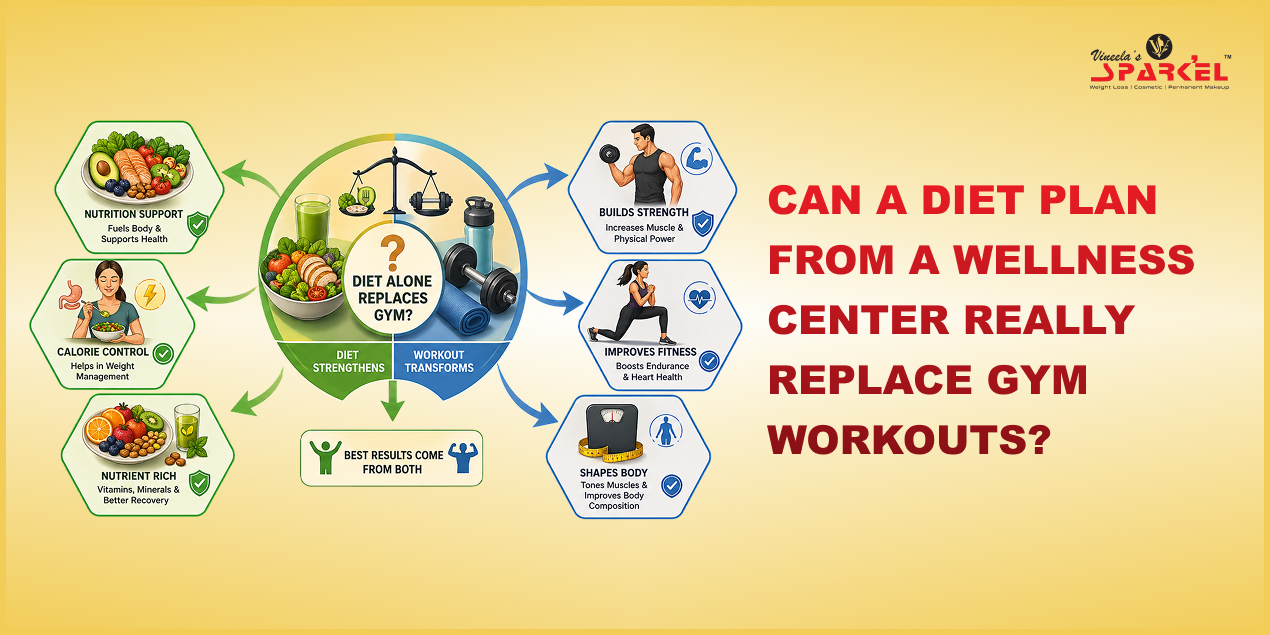
Can a diet plan from a wellness center really replace gym workouts?
A structured diet plan from a wellness center plays a crucial role in achieving overall health and fitness goals by focusing on nutrition-driven results. In today’s fast-paced lifestyle, many individuals are exploring whether proper dietary guidance can be as effective as traditional gym workouts. A well-designed diet plan helps in managing weight, improving metabolism and enhancing energy levels without heavy physical training. Wellness centers often customize nutrition programs based on individual health conditions and lifestyle needs. While exercise builds strength and endurance, diet primarily influences body composition and internal health. This raises an important question about whether nutrition alone can deliver comparable fitness outcomes.
What Does a Wellness Center Diet Plan Actually Include?
A wellness center diet plan is a structured nutritional program designed to improve overall health, balance and lifestyle. It typically includes a personalized meal chart based on an individual’s body type, health conditions and fitness goals. The plan emphasizes whole foods such as fresh fruits, vegetables, whole grains and lean proteins. It reduces or eliminates processed foods, refined sugars and unhealthy fats to support better metabolism. Hydration is also a key component, with a strong focus on adequate water intake throughout the day. Many wellness centers include detox-friendly foods to help cleanse the body naturally. Portion control and mindful eating practices are encouraged to prevent overeating. The plan may also integrate superfoods rich in vitamins, minerals and antioxidants. Regular monitoring and adjustments are made by nutrition experts for better results. .
How Gym Workouts Help in Weight Loss and Fitness
Gym workouts play a crucial role in effective weight loss and overall fitness by helping the body burn calories efficiently through structured physical activity. Regular strength training and cardio exercises boost metabolism, allowing the body to burn fat even at rest. Consistent gym routines improve muscle tone, endurance and body composition, leading to a healthier physique. Workouts such as treadmill running, cycling and weight lifting enhance cardiovascular health and stamina. Gym training also helps regulate hormones that influence appetite and fat storage. A disciplined workout schedule improves mental health by reducing stress and increasing motivation. It supports long-term weight management by building sustainable fitness habits. Professional gym guidance ensures proper technique, reducing the risk of injury. Combining workouts with a balanced diet maximizes fat loss results.
Can a Diet Plan Alone Help You Lose Weight Without Gym?
A well-structured diet plan can significantly contribute to weight loss even without regular gym workouts, as calorie control plays a key role in fat reduction. By maintaining a calorie deficit through balanced meals, the body begins to utilize stored fat for energy. Nutrient-rich foods such as vegetables, fruits, lean proteins and whole grains support metabolism and reduce unhealthy cravings. Portion control and mindful eating are essential factors in achieving consistent results. Avoiding processed foods, sugary drinks and excess fats further accelerates weight management. Hydration also supports digestion and helps control appetite effectively. Although exercise enhances results, diet alone can still drive noticeable weight loss when followed strictly. Consistency and discipline in food choices are crucial for long-term success. A sustainable diet plan focuses on gradual, healthy fat reduction rather than quick fixes.
Ideal Balance Between Diet and Exercise for Best Results
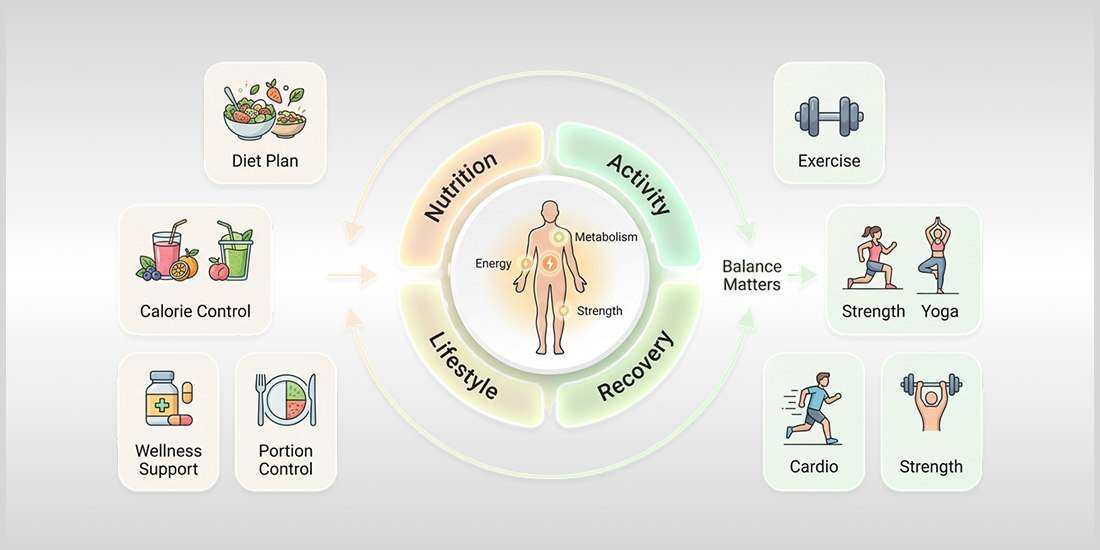
Maintaining the ideal balance between diet and exercise is essential for achieving sustainable health and fitness results. A well-structured diet provides the body with the necessary nutrients, energy and recovery support needed for physical activity. Regular exercise on the other hand, helps burn calories, build strength and improve cardiovascular health. When both are combined effectively, they enhance metabolism and accelerate fat loss in a healthy manner. Proper nutrition ensures better performance during workouts and faster muscle recovery afterward. Similarly, consistent physical activity improves digestion and nutrient absorption in the body. It is important to avoid extreme dieting or overtraining, as both can negatively impact overall well-being. A personalized plan based on individual goals helps maintain long-term consistency and motivation. Hydration, sleep and stress management also play a key role in supporting this balance.
Conclusion
A diet plan from a wellness center like VSparkel can significantly support weight management and overall health. While structured nutrition helps in controlling calories, improving metabolism and promoting internal wellness, exercise plays a key role in building strength, endurance and cardiovascular fitness. VSparkel’s guided diet approach works best when combined with physical activity for sustainable results. Relying only on diet may lead to limited fitness outcomes compared to a balanced lifestyle approach. Therefore, integrating both nutrition planning and workouts ensures long-term health, energy and body transformation.
FAQs
1.Can a diet plan from a wellness center replace gym workouts completely?
A wellness center diet plan can significantly support weight loss by controlling calorie intake and improving eating habits, but it cannot fully replace gym workouts. Exercise helps in building muscle, improving metabolism and enhancing body tone. While diet reduces fat, workouts shape the body.
2. Is it possible to lose weight without going to the gym if I follow a diet plan strictly?
Yes, weight loss is possible without gym workouts if you strictly follow a calorie-controlled diet plan. A wellness center diet program can help create the required calorie deficit for fat loss.
3. Which is more effective for fat loss – diet or gym workouts?
Diet plays a more direct role in fat loss because calorie intake determines weight changes. However, gym workouts enhance metabolism, preserve muscle mass and improve body composition. So, both are important in different ways.